Freehold Is Getting By. It Should Be Thriving.
Freehold Is Getting By. It Should Be Thriving.
In thirteen months, Freehold lost the two institutions that defined it for generations. In November 2023, the Nestlé plant on Jerseyville Avenue closed after 75 years — 227 jobs gone, production moved to Mexico and Brazil, and with it about $600,000 a year in property taxes. On December 28, 2024, Freehold Raceway ran its last race, ending 171 years of harness racing at the oldest racetrack in America.
Ask anyone in town how Freehold is doing and you will hear the honest answer: we are getting by. I believe Freehold should be thriving — and I believe the numbers show exactly what is holding us back, and what could turn it around.
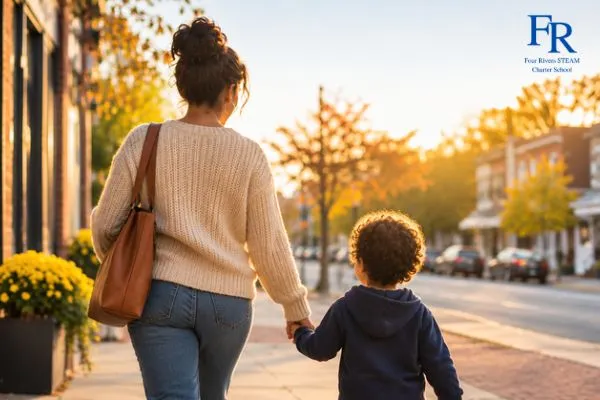
Start with the children. Freehold Borough is the youngest community in our area — a median age of 35.5, against 42.6 in Freehold Township — and its families are having babies at nearly twice the Township’s rate. The Borough is where Freehold’s next generation is being born. But watch what happens next. Only about half of Borough homes are owner-occupied. The young family rents, starts out, and then — at the moment they are ready to buy a home and put down roots — they buy in the Township.
The statistics explain why. A $500,000 house carries a tax bill of about $10,025 a year in the Borough and $7,958 in the Township. The median Borough home is worth $416,800; the median Township home, $553,600 — in two towns that share a name, a Main Street, and the same high schools. And in the Borough, about 27 percent of students reach proficiency in math. A family choosing where to buy is doing arithmetic, and the arithmetic keeps pointing across the border.
This is not speculation. The Brookings Institution found that across America’s 100 largest metro areas, homes near high-scoring schools are worth an average of $205,000 more than homes near low-scoring ones. The National Association of Realtors reports that 40 percent of home buyers under 36 — precisely the families Freehold needs — call the school district a deciding factor. School quality is priced into every home in town, whether the owner has children or not. When a town’s school option weakens, the whole town pays: in value, in ratables, and in the young taxpayers who take their futures elsewhere.
Now consider what is coming. Under the state’s Fourth Round affordable housing obligations, Freehold Township must plan for 568 new affordable homes, and the Borough for 49 more. At New Jersey’s own housing finance agency cost figures — roughly $317,000 to build one affordable home — the Township’s obligation alone represents about $180 million of construction. Those homes will be filled with families. Their children will need a school. Good schools are not a luxury to add after the housing arrives; they are a necessity that must arrive with it.
That is why I am building something specific: a charter alternative — a public school that families choose. Its design is a pathway: hands-on, project-based learning from kindergarten, Algebra 1 in grades 7 and 8, so that Freehold children are ready for the academy programs that today select only the students who already cleared the gate. As a STEAM school, its projects take on Freehold’s own questions — transportation, agriculture, the environment — the very issues debated at our township meetings, turned into curriculum. It would open with kindergarten and first grade here in the Borough, grow grade by grade to a full K–8, share space in underutilized buildings and improve them, and enroll 90 percent of its students from Freehold, with neighboring families welcome to apply for the rest.
Freehold has reinvented itself before, and the mall is proving it can again — a new anchor store there drew a million visits in its first year. But retail follows families; it does not create them. A school does. The raceway drew a crowd on weekends. The factory employed generations. A great school gathers a community every single day, and it compounds: every family that stays is a family that buys, pays taxes, and raises the next generation here.
Freehold’s babies are already being born here. The question is whether they will still be here when it is time for kindergarten — and whether their parents will buy the house on the Borough side of the line. Give them a school worth staying for, and they will stay. That is how a town stops getting by, and starts thriving.
For more information about Four Rivers STEAM Charter School, enrollment timelines, and how to support the establishment of this innovative K-8 multilingual charter school in Freehold, NJ, visit fourriversschool.com.


